Madliners: A Practical Evaluation of the Handcrafted Monoline Font Duo for Outdoor and Adventure Branding
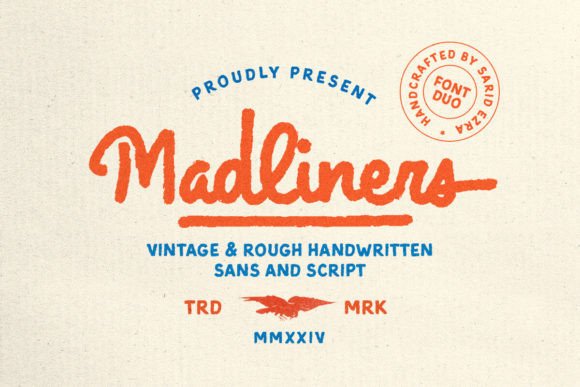
In the landscape of digital typography, finding a typeface that bridges the gap between rugged authenticity and modern legibility is often a challenge. Designers frequently struggle to balance the need for a "handmade" aesthetic with the technical requirements of multi-language support and screen readability. This is where Madliners enters the conversation as a distinct option. It is not merely a decorative script or a standard sans-serif; it is a handcrafted monoline font duo that combines a Script variant with a Sans Serif companion, both sharing a rough, vintage texture.
For professionals aged 20 to 50 who are evaluating design assets for outdoor brands, adventure clubs, or artisanal products, understanding the specific utility of Madliners is crucial. This evaluation explores what makes this font duo unique, how it compares to broader categories of vintage and hand-lettered fonts, and the specific tradeoffs involved in choosing it for your next project.
The Anatomy of Madliners: Distinctive Characteristics
At its core, Madliners offers a unified visual language through its monoline construction. Unlike traditional scripts that rely on thick-and-thin stroke variations to create elegance, Madliners maintains a consistent line weight throughout. This characteristic gives the text a raw, unpolished feel that mimics ink applied by hand or carved into wood. The "rough and vintage looks" mentioned in its description are not accidental artifacts but intentional design choices intended to evoke a sense of history and craftsmanship.
The duo format is particularly strategic. By pairing a flowing Script with a sturdy Sans Serif, the package allows designers to create hierarchy without sacrificing thematic consistency. The Script provides the emotional hook—ideal for signatures, slogans, or stylized headlines—while the Sans Serif ensures that essential information remains readable. When combined, they create a logotype or badge that feels organic rather than digitally generated. This duality is essential for brands that want to communicate reliability (via the Sans Serif) while simultaneously signaling creativity and tradition (via the Script).
Evaluating Fit: Where Madliners Excels
Determining whether Madliners is the right tool for a specific job requires looking at the intended application. The font's strengths are most apparent in industries that rely heavily on imagery of nature, exploration, and manual labor.
- Outdoor and Adventure Logotypes: For camping gear, hiking trails, or expedition companies, Madliners serves as an excellent foundation. The monoline style suggests durability, much like the equipment sold under such brands. The rough edges imply that the brand has been tested in the field, adding a layer of credibility that clean, geometric fonts might lack.
- Badge and Emblem Design: The vintage aesthetic pairs naturally with circular badges, patch designs, and crest logos. The combination of the two styles allows for intricate layouts where the Script wraps around the Sans Serif, creating a cohesive seal that feels established and timeless.
- Quote Graphics and Social Media: In an era dominated by short-form content, typography plays a massive role in engagement. Madliners is highly effective for quote cards or inspirational posts. The handwritten quality adds a personal touch that resonates with audiences seeking authentic connection over polished corporate messaging.
- Natural and Handmade Aesthetics: Any project requiring a "natural" look benefits from the imperfections inherent in Madliners. It avoids the sterile perfection of vector-based fonts, offering instead a texture that feels tactile and human-made.
Comparative Analysis: Madliners vs. Other Typography Styles
To make an informed decision, it is helpful to compare Madliners against other common approaches in the vintage and script categories. Not all fonts designed to look "handmade" serve the same purpose.
Monoline vs. Variable Stroke Scripts
Traditional calligraphy-inspired fonts often feature high contrast between thick downstrokes and thin upstrokes. While elegant, these can sometimes appear too formal or delicate for rugged themes. Madliners, with its uniform width, projects a sturdier image. If your goal is to convey strength and simplicity, the monoline approach of Madliners is generally superior. However, if you require a more sophisticated, high-fashion aesthetic, a variable stroke script might be the better choice.
Digital Vintage vs. Authentic Hand-Lettering
Many designers opt for custom hand-lettering to achieve a unique look. While bespoke lettering is unmatched in originality, it is time-consuming and expensive. Madliners offers a middle ground: it provides the visual appeal of hand-lettering with the efficiency of a pre-made font file. The tradeoff is that every user will have access to the same glyphs. For mass-market products where budget and speed are priorities, Madliners is a practical alternative to commissioning custom art.
Standard Sans-Serif Alternatives
When using the Sans Serif component of Madliners, one must consider how it compares to standard geometric or humanist sans-serifs. Standard options offer maximum neutrality. Madliners introduces character immediately. If a project needs to blend seamlessly into a background without drawing attention, a neutral sans is preferred. If the goal is to make a statement about heritage or craft, Madliners forces the viewer to notice the design intent.
Critical Considerations and Limitations
While Madliners is a versatile tool, it is not a universal solution. Understanding its limitations is just as important as recognizing its strengths.
Legibility in Small Sizes: The "rough" texture and monoline style can sometimes cause characters to blur together when scaled down significantly. On very small mobile screens or fine print labels, the details of the rough edges may disappear, potentially reducing readability. In these cases, the Sans Serif component should be used alone, or the font size must be increased to ensure clarity.
Tone Appropriateness: The vintage and rugged vibe is powerful, but it can also be limiting. Using Madliners for a fintech startup, a medical clinic, or a luxury fashion house would likely create a dissonant brand identity. The font communicates a specific set of values—authenticity, grit, and nature—that do not translate well to contexts requiring precision, sterility, or opulence.
Stylistic Consistency: Because the Script and Sans Serif share a specific roughness, mixing them with other fonts requires care. Pairing Madliners with a highly modern, sharp-edged font can result in a jarring visual clash. Successful integration usually involves sticking to other rustic, textured, or similarly imperfect typefaces to maintain a cohesive design language.
Multi-Language Support and Global Applicability
A significant advantage of Madliners is its support for multiple languages. In a globalized market, many fonts are restricted to Latin characters, limiting their use for international campaigns. Madliners' ability to extend beyond English opens doors for brands targeting diverse demographics. Whether the project involves Spanish, French, German, or other supported scripts, the consistent monoline style ensures that the brand voice remains intact across different regions. This makes it a robust choice for tourism boards, export-oriented product lines, or community organizations with a multicultural membership.
Making the Decision: When to Choose Madliners
Selecting a typeface is ultimately a strategic decision based on the message you wish to convey. You should choose Madliners if:
- Your project prioritizes a narrative of craftsmanship, history, or natural origins.
- You need a dual-font system that balances artistic flair with structural stability.
- Speed and cost-efficiency are factors, making a pre-made font preferable to custom illustration.
- Your audience responds well to textures and imperfections that suggest human involvement.
Conversely, you may need another option if:
- Maximum legibility at tiny sizes is the primary constraint.
- The brand identity requires a sleek, futuristic, or ultra-minimalist appearance.
- The project demands a level of customization that only a commissioned artist can provide.
Ultimately, Madliners stands out as a specialized resource for designers working in the outdoor, adventure, and artisanal sectors. Its ability to merge a rough, vintage aesthetic with functional versatility makes it a valuable asset. By carefully weighing its stylistic impact against the specific needs of your project, you can determine if this handcrafted duo is the key to unlocking your brand's visual potential.