Ashton Royal Font Evaluation
In the landscape of digital and print typography, selecting the right typeface is a critical decision that influences readability, brand perception, and overall aesthetic quality. Ashton Royal has emerged as a distinctive option for designers seeking a modern and bold script style. Unlike traditional serif or sans-serif fonts, this typeface offers a dynamic approach to lettering that combines structure with fluidity. This article provides an objective evaluation of Ashton Royal, exploring its technical specifications, design characteristics, and practical applications to help you determine if it aligns with your specific project requirements.
Understanding the Design Philosophy
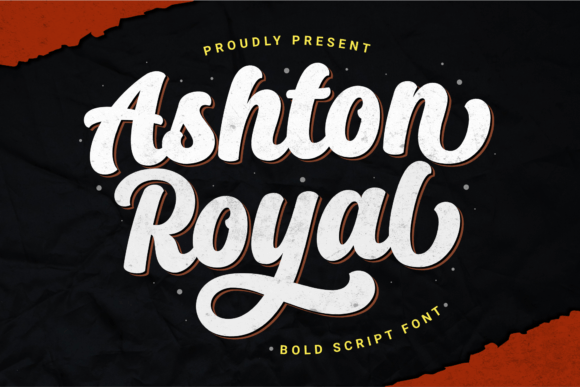
At its core, Ashton Royal is defined by its classification as a modern and bold script font. The visual identity of this typeface is characterized by strong strokes and a confident presence on the page. What sets it apart from standard cursive typefaces is the attention to detail in individual character construction. Each letter possesses a unique and beautiful touch, ensuring that the text does not appear monotonous or mechanically generated. These variations bring designs to life by introducing organic movement and personality that static fonts often lack.
The "bold" descriptor in its name suggests a weight intended to command attention. It is not designed merely as a subtle accent but as a primary voice in a composition. The curves are deliberate, and the connections between letters are crafted to maintain legibility while maximizing stylistic flair. This balance makes it suitable for contexts where impact is required without sacrificing the elegance associated with script typography.
Technical Specifications and Accessibility
One of the most significant technical advantages of Ashton Royal lies in its encoding method. The font utilizes PUA (Private Use Area) encoding. In the context of web development and desktop publishing, PUA encoding allows for the mapping of specialized glyphs to characters that do not have standard Unicode assignments. This means that the extensive library of swashes, alternate characters, and ligatures inherent to the font family can be accessed with ease.
For designers working in environments where advanced typographic features are essential, this encoding strategy ensures comprehensive access to the full range of the font's capabilities. Users can integrate complex flourishes and decorative elements into their workflows without encountering compatibility issues common with other specialty scripts. The ability to access all glyphs efficiently streamlines the design process, allowing for rapid iteration and refinement of layouts.
Practical Applications and Use Cases
Evaluating where Ashton Royal fits best requires analyzing the nature of the content and the desired emotional response. Due to its bold and modern script nature, it is particularly effective in situations requiring high visual impact.
- Brand Identity: Logos and branding materials benefit from the unique touches of each letter, creating a memorable and distinct visual signature.
- Editorial Headlines: Magazine covers, book titles, and article headers can utilize the font to establish a tone of sophistication and creativity.
- Marketing Materials: Posters, flyers, and social media graphics often require immediate engagement. The bold weight of Ashton Royal helps capture the viewer's eye quickly.
- Event Invitations: Weddings, galas, and corporate events frequently employ script fonts to convey formality and personalization.
In these scenarios, the font acts as a focal point. The combination of modern aesthetics and traditional script elements allows it to bridge the gap between contemporary design trends and timeless elegance.
Balancing Benefits and Tradeoffs
While Ashton Royal offers distinct advantages, a balanced evaluation must consider potential limitations. The primary tradeoff involves readability at smaller sizes. Script fonts, by their nature, contain more intricate details than block letters. When scaled down for body text or small mobile screens, the unique touches and swashes may become indistinct, leading to reduced legibility.
Furthermore, the boldness of the font can dominate a layout if not paired correctly. If used excessively or alongside other heavy typefaces, the design may feel cluttered or overwhelming. Designers must exercise restraint, using Ashton Royal strategically rather than ubiquitously. It is generally advisable to pair this font with a clean, neutral sans-serif or serif typeface for supporting text to ensure hierarchy and clarity.
Another consideration is the learning curve associated with PUA encoded fonts. While the technology allows for greater flexibility, users must ensure their software supports the specific glyph mappings. Although most modern design suites handle this well, legacy systems or basic text editors might not render the special characters correctly. Proper setup is essential to fully leverage the font's potential.
Situations Warranting Alternatives
There are specific contexts where Ashton Royal may not be the optimal choice. If the goal is to present large volumes of informational text, such as long-form articles, user manuals, or legal documents, a highly readable serif or sans-serif font is preferable. The ornamental nature of Ashton Royal can distract readers and hinder comprehension in data-heavy environments.
Additionally, projects targeting audiences who prioritize minimalism and stark functionality may find the decorative elements of Ashton Royal too stylized. In UI/UX design for mobile applications, where screen real estate is limited and clarity is paramount, simpler typefaces are often the industry standard. Similarly, if a project requires a strictly formal or conservative tone, such as in banking or government communications, the modern flair of this script might be perceived as insufficiently professional.
Decision-Making Insights
To determine whether Ashton Royal aligns with your goals, consider the following checklist during the selection process:
- Define the Hierarchy: Will this font serve as a headline or a display element? If yes, Ashton Royal is a strong candidate.
- Assess Readability Needs: Is the text short and impactful, or does it need to be read extensively? Choose Ashton Royal for the former.
- Check Technical Compatibility: Verify that your production environment supports PUA encoding and that you have the necessary tools to access the swashes.
- Evaluate Brand Voice: Does the "modern and bold" persona match your brand identity? Ensure the font reflects the values you wish to communicate.
The decision to use Ashton Royal should be driven by the specific needs of the project rather than trendiness alone. Its strength lies in its ability to add character and visual interest to key moments within a design. By understanding its technical constraints and aesthetic strengths, designers can make informed choices that enhance the overall quality of their work.
In conclusion, Ashton Royal represents a robust option for those seeking a versatile script font with a modern edge. Its unique letterforms and accessible glyph set via PUA encoding provide a solid foundation for creative expression. However, like any tool, its effectiveness depends on appropriate application. When used with intention and paired thoughtfully with complementary typefaces, it can elevate a design to a new level of sophistication and impact.